China’s hospitality sector places fire safety under close scrutiny, especially in hotels, serviced apartments, restaurants, and public entertainment venues. A decorative chair may look harmless, yet its foam, fabric, adhesive, and wooden frame can affect smoke development and flame spread. The risk becomes clearer in a crowded guestroom corridor or a dimly lit banquet hall.
What are the fire safety standards for hospitality furniture? The answer is not one universal rule. Requirements may depend on the furniture type, building use, local enforcement, project specifications, and applicable Chinese standards. Relevant references can include GB 8624 for reaction-to-fire classification, GB 20286 for flame-retardant products used in public places, and fire protection provisions within building regulations. These standards should not be treated as interchangeable.
Practical compliance begins with traceable materials and verified test records. Manufacturers should identify fabric composition, foam density, timber treatment, coatings, and adhesives. They should also confirm whether testing applies to the complete furniture item or only individual materials. This distinction is often overlooked. A fabric sample may pass alone, while the finished sofa performs differently because of stitching, padding, or glue.
Reliable suppliers normally provide current laboratory reports, batch information, and production records. Independent testing bodies, recognized laboratories, and local fire authorities can clarify uncertain cases. Standards may change, and regional interpretations can differ. That is inconvenient, but it matters. Buyers should review certificates before purchase, not after installation. This guide examines China’s hospitality furniture fire safety expectations, common testing concerns, and practical steps for safer procurement.
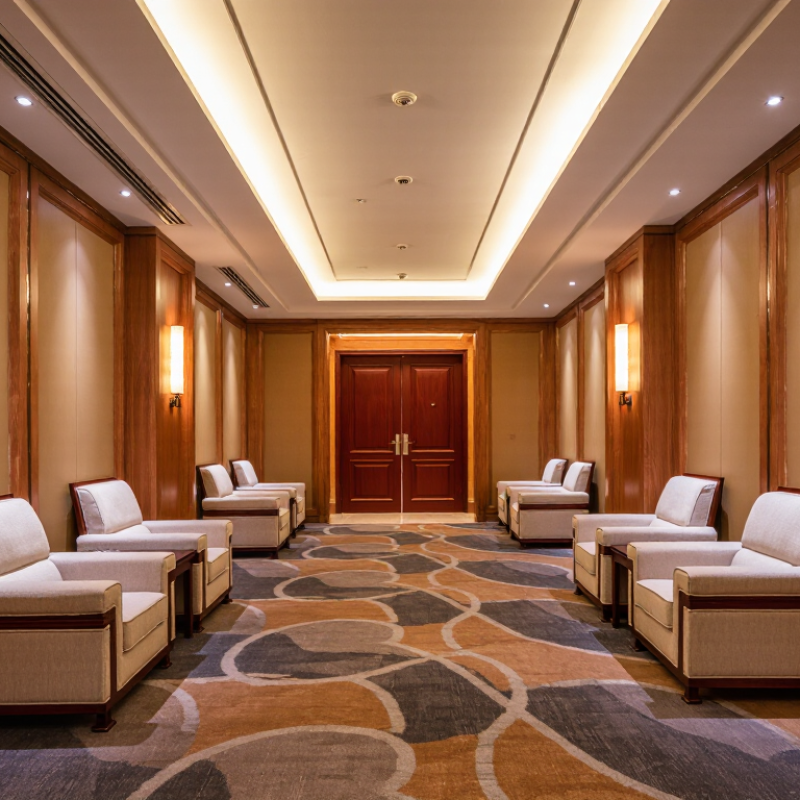
China’s hospitality furniture fire-safety scope reaches beyond the furniture workshop. It covers guest rooms, hotel lobbies, restaurants, meeting spaces, and staff areas. Upholstered chairs, sofas, mattresses, curtains, wall panels, carpets, and decorative wood products may all affect fire performance. The boundary is not perfectly tidy. Furniture can become part of the interior fire load after installation.
GB 8624 provides China’s classification framework for the burning behavior of construction and decoration materials. GB 20286 addresses flame-retardant products and subassemblies used in public places. GB 50222 also matters when furniture interacts with interior decoration systems. In practice, suppliers should identify fabric, foam, timber, laminates, adhesives, and coatings separately. Testing should match the final construction, not one isolated material. A foam certificate cannot automatically prove a complete sofa is safe.
The China Fire and Rescue Administration reported 945,000 fires nationwide in 2023. Its National Fire Situation in 2023 shows why hotel operators need traceable controls. Procurement files should include test reports, batch records, supplier declarations, and installation photographs. Site teams should also check damaged upholstery, loose covers, and furniture placed near heat sources. A report from a laboratory helps, but it is not the whole answer. Real rooms are messier than test chambers. Maintenance records are often the weak point, and that deserves honest review.
China’s hotel furniture fire safety requirements combine national standards, building rules, and local enforcement. The State Administration for Market Regulation oversees product quality and mandatory standards. The Ministry of Emergency Management, through the National Fire and Rescue Administration, guides fire supervision and emergency control.
For upholstered chairs, sofas, curtains, mattresses, and decorative panels, buyers commonly review flame-retardant performance under standards such as GB 20286. Material classification may also refer to GB 8624, which evaluates combustion behavior and fire performance. Hotel furniture must fit the building’s wider fire design, including requirements under GB 55037 and GB 50016. The exact requirement can change with room type, occupancy, and installation location.
Local fire departments and housing or construction authorities may inspect hotel projects before opening. Their interpretation matters. A certificate alone may not prove full compliance. Check the test report, product batch, material composition, and installation records. Keep samples when possible.
In practical reviews, inspectors often focus on hidden risks. Foam inside a sofa, exposed wiring, narrow escape routes, and untreated wall panels can create serious problems. Ask suppliers for Chinese test reports from qualified laboratories. Verify the report number independently. Some documents look complete but lack the required test scope.
Standards can be revised. Local rules may also differ. This is where projects sometimes become uncertain. A furniture specification should be reviewed by a qualified fire consultant before purchasing, especially for imported materials or custom-made hotel interiors.
Fire-retardant furniture is assessed by material behavior, not appearance. In China, GB 20286-2006 addresses flame-retardant products and components used in public places. GB 8624 classifies construction products, but it does not automatically certify loose hotel furniture. This distinction is often missed.
A hotel chair may contain timber, foam, fabric, adhesives, and metal parts. Each layer can change ignition speed, flame spread, smoke production, and burning duration.
The complete furniture assembly should be tested where possible. Relevant evidence may include ignition resistance, flame spread, heat release, and burning-drip performance.
Upholstered seating deserves particular attention. The National Fire Protection Association reported that upholstered furniture was involved in about 2% of U.S. home fires but 23% of related fire deaths during 2017–2021. The material combination matters.
Not only the fabric.
Hotel specifications should identify the required performance class, test method, sample construction, and certificate scope. A “flame-retardant” label alone is weak evidence.
Suppliers should provide reports from qualified laboratories, including foam density, fabric composition, and treatment durability. Wet cleaning and repeated use can reduce performance.
Real inspections may reveal gaps between laboratory samples and installed furniture. Project teams should verify the current Chinese requirements with the local fire authority and testing laboratory before procurement.
What Are China Hospitality Furniture Fire Safety Standards?
Testing, certification, and documentation are central to hospitality furniture compliance in China. Requirements may differ between hotel rooms, public corridors, restaurants, and upholstered seating. Materials commonly require evaluation for flame spread, smoke behavior, ignition resistance, or burning performance. Wood panels, foam, fabrics, adhesives, and surface coatings should be assessed as complete material systems. Testing only one component can create a misleading result.
Testing should be completed by a qualified laboratory with suitable competence and traceable procedures. Depending on the project, relevant Chinese standards may include GB 8624 for burning behavior classification and other product-specific requirements. A test report should identify the exact material, thickness, color, construction, supplier, and production batch. Small changes matter. A denser foam or different fabric blend can alter performance.
Certification is not always a single universal certificate for every furniture item. Project specifications, building use, local fire authorities, and procurement contracts may determine the evidence required. Keep current test reports, material declarations, factory quality records, purchase invoices, and batch traceability documents together. Installation and maintenance instructions also deserve attention. In practice, documentation is often prepared too late. That is a weakness worth correcting. A polished file cannot compensate for an untested material or unclear product identity. Suppliers should review requirements before production, not after delivery.
| Furniture or Material Scope | Applicable Chinese Standard or Reference | Principal Safety Concern | Typical Testing or Evaluation | Certification and Compliance Status | Documents Normally Maintained |
|---|---|---|---|---|---|
| Upholstered sofas, lounge chairs, benches, headboards and mattresses | GB 17927.1-2011 and GB 17927.2-2011 | Ignition resistance of upholstered furniture exposed to a smouldering cigarette or a small gas flame. |
|
Application-dependent The relevant test method should be selected according to the product construction, intended use and project specification. |
Laboratory test report, upholstery construction description, foam and fabric specifications, approved sample record and production-batch traceability. |
| Furniture and decorative products used in public places | GB 20286-2006 | Flame-retardant performance and smoke-related behavior of products used in public places, including applicable furniture and interior products. | Testing is selected according to the product type and may include ignition, flame spread, after-flame, after-glow and smoke-performance indicators. |
Conditional requirement Applicability should be confirmed against the building type, product category and local fire-control requirements. |
Product test report, flame-retardant treatment information, material composition, supplier declarations, installation instructions and maintenance limitations. |
| Furniture components and interior products requiring a reaction-to-fire classification | GB 8624-2012 | Classification of construction products and building materials according to their reaction to fire. |
|
Project-dependent The standard is primarily a classification framework; the required class must be specified by the project fire design or authority. |
Classification report, test reports for the tested construction, product technical data sheet, installation method and change-control records. |
| Textile upholstery, curtains, draperies and decorative fabrics | GB/T 17591-2006 and, where applicable, GB 20286-2006 | Flame-retardant performance of textile materials used in public or hospitality environments. | Flammability and flame-retardant performance testing appropriate to the textile structure, treatment and intended use. |
Use-specific A treated fabric should not be assumed compliant after laundering, coating, lamination or changes in construction. |
Fabric test report, fiber composition, grammage, finish or chemical-treatment declaration, laundering durability data and lot identification. |
| Foam, padding and composite upholstery assemblies | Applicable requirements under GB 17927, GB 20286 and the project fire specification | Fire behavior can change when foam, batting, fabric, adhesive, barrier cloth and frame materials are combined. | Testing of the finished or representative composite assembly is preferred; component-only reports may not represent the completed furniture. |
Assembly-specific Any change in foam density, textile, adhesive, barrier layer or sewing pattern may require technical review or retesting. |
Bill of materials, cross-sectional construction drawing, component reports, assembly test report, approved golden sample and change approval record. |
| Wood, wood-based panels, laminates and solid-surface furniture elements | GB 8624-2012, together with applicable product and project requirements | Reaction to fire, combustibility and contribution to fire growth of exposed surfaces and composite panels. | Testing route depends on the exposed material, thickness, coating, substrate, edge treatment and final installation condition. |
Project-dependent Surface coating or laminate changes can affect the result and should be controlled as part of the tested construction. |
Panel or material test report, coating and laminate specifications, thickness records, technical drawings, supplier declarations and installation details. |
| Fire-retardant treatments, coatings and treated fabrics | GB 20286-2006 and the applicable material-performance standard | Retention of flame-retardant performance during service, cleaning and expected environmental exposure. | Initial fire-performance testing plus durability or laundering evaluation when the product is cleaned, washed, exposed to moisture or subject to abrasion. |
Treatment-dependent A chemical treatment does not automatically establish compliance for the finished furniture article. |
Chemical technical data sheet, safety data sheet, treatment process record, dosage or concentration record, durability test results and restricted-substance declaration. |
| Laboratory testing and conformity evidence | Relevant GB or GB/T standard identified in the project specification | Reliability, impartiality and traceability of fire-test results. | Use a competent laboratory capable of performing the specified method. For formal Chinese regulatory or project submissions, confirm whether CMA qualification or CNAS accreditation is required by the receiving party. |
Acceptance depends on the project CMA and CNAS are laboratory qualification or accreditation mechanisms, not universal product certificates. |
Signed test report, laboratory qualification or accreditation information, sample photographs, test date, standard edition, test conditions and report validity or acceptance statement. |
| Product certification and declarations | Applicable product certification scheme, project specification and local authority requirements | Evidence that the supplied furniture matches the tested and approved construction. | Document review, sample comparison, factory quality controls and, where required, follow-up testing or inspection. |
Not universally mandatory Hospitality furniture does not automatically require China Compulsory Certification solely because it is used in a hotel. Do not substitute a voluntary certificate for a legally required approval. |
Declaration of conformity, certificate where applicable, test report, product specification, quality-control plan, factory inspection records and certificate-scope confirmation. |
| Hotel project submission package | Applicable national standards, local fire-code interpretation and project fire-design documents | Consistency between the furniture delivered, the fire strategy and the approved interior design. | Technical review of furniture schedules, material samples, fire-test evidence, installation details and site acceptance records. |
Required when specified The hotel owner, designer, contractor, fire consultant or authority may impose requirements stricter than a general product specification. |
Furniture schedule, material matrix, approved samples, test reports, certificates or declarations, delivery inspection records, nonconformance reports and final as-built documentation. |
| Important note: Chinese fire-safety obligations depend on the building classification, occupancy, installation location, material construction and local project requirements. The standards listed above should be checked against the current edition and confirmed with the project fire-safety designer, qualified testing laboratory and relevant local authority before procurement or installation. | |||||
Manufacturers supplying hospitality furniture to China should treat fire safety as a documented process, not a final inspection. Confirm the applicable Chinese GB standards before selecting foam, fabric, wood panels, adhesives, and coatings. Requirements can vary by furniture type, hotel location, and project specification. A qualified laboratory should test representative finished assemblies, not only separate materials. Keep records.
Testing must reflect real use. A chair with dense upholstery, exposed seams, and decorative buttons may perform differently from a flat fabric sample. Manufacturers should control batch numbers, supplier certificates, production changes, and test reports. Even a small adhesive change can affect flame spread. Do not guess.
Importers need a clear compliance file before shipment. It should include invoices, material declarations, laboratory reports, product drawings, Chinese labels where required, and traceability documents. Reports should match the exact model and construction. An old report may not cover a redesigned sofa. That gap matters.
Hotels also have responsibilities after delivery. They should verify furniture quantities, inspect damaged upholstery, maintain safe spacing, and retain compliance documents for inspections. Store rooms need attention too. Overcrowding furniture near heat sources creates avoidable risk. Hotel teams should record routine checks and remove visibly damaged items from service. In practice, installation changes are often overlooked. A competent local fire-safety consultant can review the final arrangement against current Chinese requirements. Mistakes still happen, so the process should allow correction before opening.
Upholstered chairs, sofas, curtains, mattresses, wall panels, foam, fabrics, adhesives, and coatings may need review. Small changes matter.
GB 20286 may address flame-retardant performance. GB 8624 evaluates burning behavior and fire performance. Building rules may also apply.
No. A certificate alone may not cover the hotel’s location, room type, or installation method. Check the full evidence.
It should identify the material, thickness, color, construction, supplier, and production batch. An old report may not cover a redesigned sofa.
Finished assemblies should be tested when possible. Foam, fabric, seams, buttons, and adhesives can interact during burning. Do not test blindly.
Keep invoices, material declarations, drawings, laboratory reports, labels, batch records, and traceability documents. Match every report carefully.
They may examine sofa foam, exposed wiring, untreated panels, narrow escape routes, and furniture near heat sources. Small gaps can matter.
Hotels should check quantities, inspect damaged upholstery, maintain safe spacing, and record routine inspections. Remove visibly damaged items.
Review them before material selection and production, not after delivery. Late checking creates avoidable pressure.
Local interpretation can differ, and installation changes may create new risks. A certificate cannot inspect the room.
China’s hospitality furniture fire safety standards establish a structured framework for reducing fire risks in hotels, guesthouses, restaurants, and other public accommodation spaces. What are the fire safety standards for hospitality furniture? They generally cover the scope of regulated furniture, applicable national and industry regulations, responsible authorities, and safety expectations for products used in rooms, corridors, dining areas, and public facilities. Requirements may address flame resistance, smoke generation, ignition behavior, and the safe use of materials such as fabrics, foams, wood-based panels, coatings, and adhesives.
Manufacturers and importers are typically expected to select compliant materials, arrange relevant fire-performance testing, and maintain technical files, test reports, product specifications, and conformity records. Furniture performance classifications should match the intended application and environmental risk. Hotels should verify supplier documentation, inspect delivered products, preserve certification records, and ensure that furniture remains properly installed and maintained. A complete compliance process helps demonstrate product safety, support inspections, and reduce fire hazards throughout the furniture’s service life.

Lullaby Furniture