A dining table may carry generations of family meals, while a softwood chair can show dents after a few busy years. The difference is not only appearance. Wood species, construction, finish, room conditions, and everyday use all influence how long furniture remains sound. Oak and maple are often chosen for demanding pieces because they resist wear well. Walnut and cherry offer attractive grain, but still need sensible care. Pine is lighter and easier to mark. Teak’s natural oils can help it withstand moisture, though quality and maintenance matter.
What is the lifespan of different furniture wood species? There is no single reliable number for every table, cabinet, or chair. A well-built hardwood piece may last for decades, while poorly joined furniture can fail much sooner, whatever its wood. Even careful estimates are only guides. A sunny window can fade a finish; a leaking plant pot can leave a dark ring; repeated movement can loosen a joint. Small details add up.
This guide compares common furniture woods by durability, typical use, and care needs. It also distinguishes solid wood from veneer and explains why joinery and finishing deserve attention alongside species. Look for practical clues, such as exposed end grain, sturdy joints, and a finish suited to the room. A lifespan chart can be useful, but it cannot predict every household. That part is a little frustrating—and worth remembering before you buy.
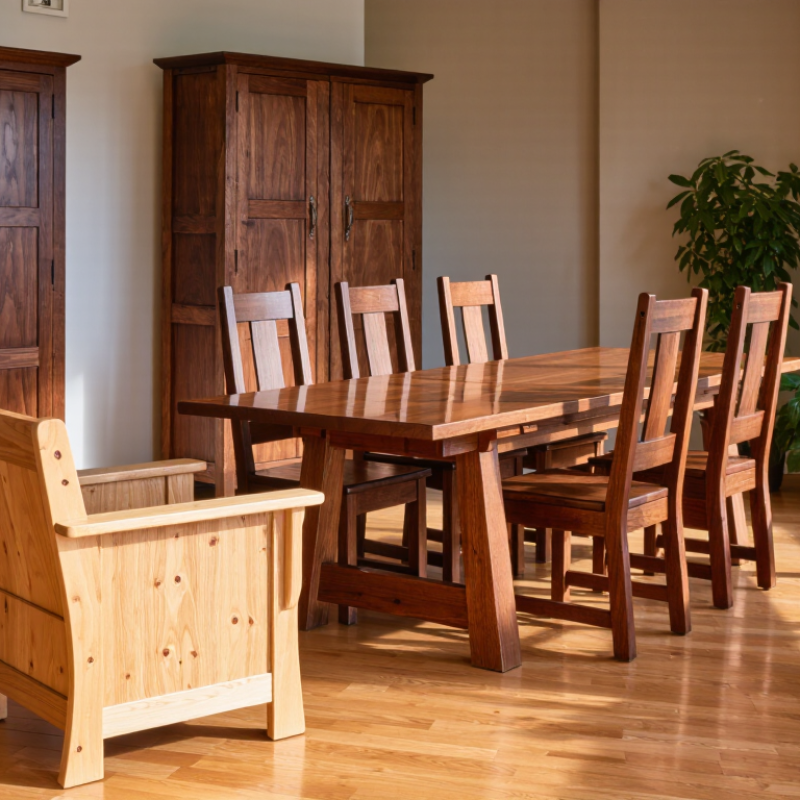
Wood species set a baseline, but daily conditions often decide whether furniture lasts decades or fails early. Hardness resists dents; it does not prevent rot, loose joints, or peeling veneer. The USDA Forest Products Laboratory’s 2021 Wood Handbook identifies fungal-decay risk when wood moisture content rises above roughly 20 percent. This percentage compares water weight with oven-dry wood weight. At about 30 percent, wood reaches fiber saturation, making moisture-related movement especially important. Moisture wins. A chair beside a radiator may dry unevenly and develop loose joints; damp flooring can expose its feet to decay.
Construction matters, too. End grain absorbs water readily, while tight joinery and sealed edges slow exposure. Finishes buy time, not immunity. A scratch near a tabletop edge can let spills reach the wood fibers. Daily loads, sunlight, and repair quality also affect service life. Repeatedly dragging a cabinet across tile strains its fasteners; direct sun can fade its color and degrade surface coatings. Wipe spills, keep furniture away from damp walls, and tighten a wobbling screw before its hole widens. Even careful checks have limits: moisture can remain hidden beneath a drawer bottom.
Factors That Determine How Long Furniture Wood Lasts
| Wood species | Typical potential service life* | Useful characteristics | What can shorten its life |
|---|---|---|---|
| Oak (red or white) | About 50–100+ years | Hard, strong, and widely used for tables, chairs, and cabinets. White oak is notably resistant to moisture compared with many common hardwoods. | Loose joints, prolonged dampness, standing water, and neglected surface damage. |
| Hard maple | About 30–75 years | Dense and wear-resistant, making it suitable for heavily used surfaces and furniture parts that experience frequent contact. | Impact damage, water intrusion at joints, and cracking caused by very dry or rapidly changing indoor conditions. |
| Black walnut | About 30–75 years | A stable, workable hardwood often selected for indoor furniture and decorative pieces. | Sunlight fading, scratches, heat, and poorly supported or repeatedly stressed joints. |
| Cherry | About 30–75 years | A fine-grained hardwood that is relatively easy to work and develops a deeper, warmer color with age and light exposure. | Uneven sunlight exposure, dents, moisture damage, and weak construction. |
| Beech | About 20–60 years | A strong, hard hardwood commonly used for chair parts and other furniture components; it bends well when properly steamed. | High or fluctuating humidity, which can contribute to movement, and prolonged exposure to moisture. |
| Pine | About 10–30 years | A widely available softwood that is relatively light and easy to repair; well-built pine furniture can remain usable for decades. | Denting, abrasion, moisture, insect damage where untreated, and weak or poorly maintained joints. |
| Cedar | About 15–40 years | Lightweight and naturally resistant to some insects and decay; often used for storage furniture and certain outdoor applications. | Its relative softness makes it prone to dents; poor drainage, weather exposure, and unprotected surfaces can also reduce service life. |
| Teak | About 50–100+ years | Naturally oily and durable, with good resistance to moisture; used for both indoor furniture and appropriately designed outdoor pieces. | Poor-quality construction, persistent standing water, harsh exposure, and neglected hardware or joints. |
Key factors that determine furniture longevity
*Service-life figures are broad, illustrative estimates for well-made, maintained furniture—not guaranteed lifespans or standardized ratings. Actual life varies with construction, use, environment, repairs, and care. A surface finish can protect wood but does not make furniture waterproof.
Well-built pine furniture may last 10–20 years, while fir may last 15–25. Cedar can last for decades indoors when kept dry. These are estimates, not promises.
Moisture, construction, daily loads, sunlight, and repair quality all matter. A damp floor can expose chair feet to decay. A loose joint can worsen with repeated use.
No. Hardness helps resist dents, but it does not prevent rot or loose joints. A dense tabletop can still fail if water sits at its seams.
Hard maple and white oak resist dents better than softer options. Walnut can also suit many tables, though it is softer. Still, no wood fixes weak joinery.
Wood can shrink, swell, or develop checks as humidity changes. Decay risk rises when moisture content exceeds roughly 20 percent. Hidden dampness can linger beneath a drawer.
Not necessarily. Pine is light and easy to work, but its edges may dent. Fir can suit frames, while cedar resists decay but marks easily. Trade-offs remain.
Yes. Direct sun can fade color and degrade surface coatings. Cherry may darken with light, so its appearance can change over time.
Wipe spills promptly, keep pieces away from damp walls, and tighten wobbling screws early. Use a finish for added protection. It is not armor.
What is the lifespan of different furniture wood species? It depends on more than the type of wood. Hardwoods such as oak, maple, walnut, and cherry are generally durable choices, with well-made pieces often lasting for decades or even generations. Softer woods, including pine and cedar, may dent or wear sooner, though their lifespan can still be substantial when they are carefully built and used in suitable settings. Moisture, sunlight, daily use, and changes in temperature can all affect how quickly furniture ages.
Construction and upkeep matter just as much as species. Strong joinery, properly dried wood, and protective finishes help furniture withstand regular use, while cleaning gently, controlling humidity, and repairing small issues early can extend its life. Choose wood according to the furniture’s purpose: a sturdy hardwood may suit a frequently used dining table, while a lighter softwood can work well for less demanding pieces. Matching durability to use helps furniture remain functional and attractive for years.

 Lullaby Furniture